
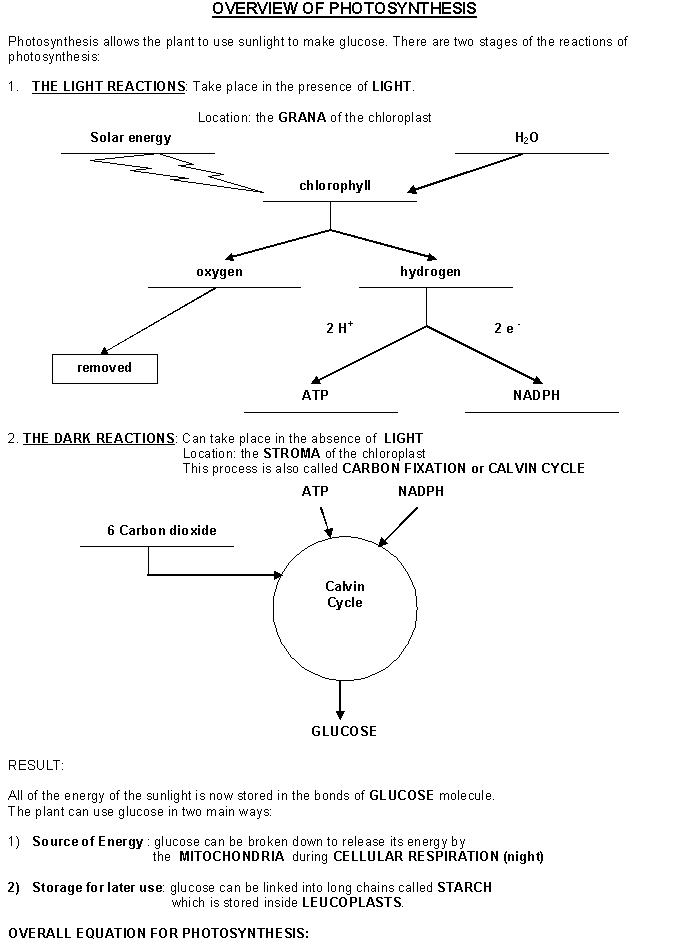
1.The Granum or Grana are the stacks of disks.
2.The individual disk is the Thylakoid.
3.The material that keeps the granum stacks in place is the Stroma.
4.This should clarify any problems that you are having with these structures!
Here is a a basic visual animation of what is happening in the thylakoid membrane.
CLICK HERE!



5 comments:
Hey Mr Smith...I was just thinking about what you said today about leaves turning red in the winter. If the leaves are looking for the most energy possible as winter is coming, then wouldn't they absorb the red & violet rays because they're more powerful?
And if they did that, then they wouldn't be *reflecting* the red rays back into our eyes. So why do the leaves look red in the winter...?
As summer ends and autumn comes, the days get shorter and shorter. This is how the trees "know" to begin getting ready for winter.
During winter, there is not enough light or water for photosynthesis. The trees will rest, and live off the food they stored during the summer. They begin to shut down their food-making factories. The green chlorophyll disappears from the leaves. As the bright green fades away, we begin to see yellow and orange colors. Small amounts of these colors have been in the leaves all along. We just can't see them in the summer, because they are covered up by the green chlorophyll. These are secondary pigments, still gaining light energy yet now less of it because of shortened day light available in the winter
The bright reds and purples we see in leaves are made mostly in the fall. In some trees, like maples, glucose is trapped in the leaves after photosynthesis stops. Sunlight and the cool nights of autumn cause the leaves turn this glucose into a red color. The brown color of trees like oaks is made from wastes left in the leaves.
It is the combination of all these things that make the beautiful colors we enjoy in the fall.
check this site out for more info if you are interested Melanie.
http://www.esf.edu/pubprog/brochure/leaves/leaves.htm
Wow, thanks Mr. Smith :)
Post a Comment